torstai 14. marraskuuta 2013

Manuscript Workshop

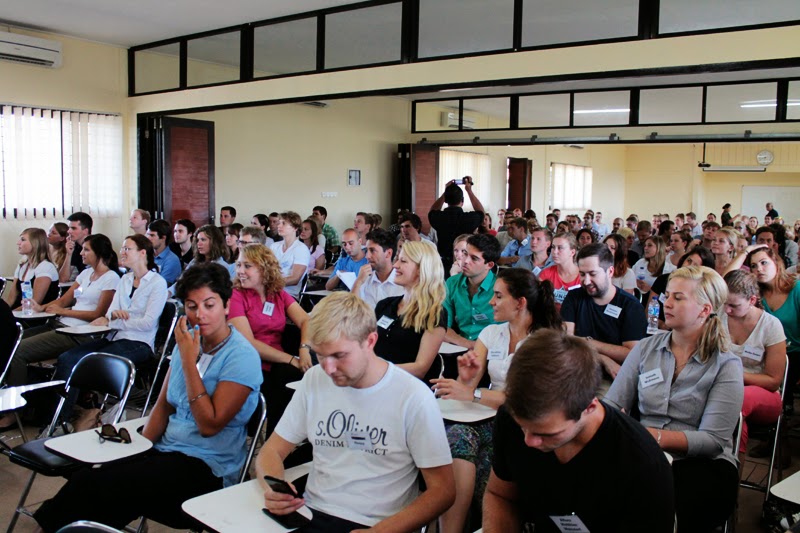
The last couple of weeks have been different compared to the normal ones (last week there was the Islamic New Year, before that was the exam week and before that the mid term break). That's why there haven't been neither workshops nor excursions almost for one month. Luckily today the students finally had again chance to learn something new about the local culture when the workshop about Balinese manuscript was held in Denpasar campus. Besides of Asia Exchange students there were also a lot of local students attending to that workshop so our students once again had a great chance to get to know better with them.

Nowadays the Latin script is used in Bali as it is in many parts of the world so you don't have to study new alphabeths when you arrive here. This makes Indonesian language classes a lot easier because students don't have to spend the first students with learning the alphabethics. Still it's important to know that there has been and actually still is an own alphabet in the island of Bali. It's used when writing Balinese, which is different language than Indonesian. Actually almost every significant island in Indonesian has its own language but Indonesian is the language that practically everybody understands.

Some centuries ago the Balinese script was really used in Bali to produce text but nowadays the Latin script has replaced it practically entirely. Still Balinese script is taught in the local school and especially in the religional texts you may still see the Balinese script. So it's really important for our students, who are studying the local culture here, to know more about the local manuscript. During the workshop students also had a great chance to actually try to write something with the Balinese alphabet. The local students were helping exchange students as much as they could. Unfortunately the manuscript is pretty difficult and even writing your own name with that is pretty good performance. Still I think this lesson and workshop was light and good way to end this school week :)


The last couple of blog posts have been only about the studying here in Bali so I promise that next week there's going to be more lighter material about the overall life in Bali :)

keskiviikko 13. marraskuuta 2013

Really about studying in Bali

I'm pretty sure this blog post is more interesting to those who haven't still been in Bali as an exchange student than to those who have already been here or actually are at this moment. You see, this time I'm going to write a little bit about the courses you can study in Bali. Unfortunately I haven't had chance to attend most of the classes because I also have so much other things to do while I'm at the university. Still during this week I've been in most of the classes so that I can write a description about the basics of the courses. Students have to choose at least five of these six courses.


Bahasa Indonesia
I have most experience of this subject because I've been attending most of the Indonesian language classes and I even did the midterm test just to see whether I've learned anything. Indonesian language is the only course which has two lessons per week. That's because the idea is of course that students could learn at least good basics of the language during their stay here and that they could really use the language when they're living here.

Studying in these lessons is pretty intensive and there may be even 50 new words in one lesson for students to learn. Of course they have to practice using those words after classes. Otherwise it's impossible to remember every new word. Anyway, the phase in Indonesian language classes may be even a little bit faster than in language classes held in Finland. I don't know about universities in other countries so I can't speak about the culture there.

Still I've understood that most of the students really like the phase in those courses because that's the way to really learn the language. At most of the time during the lessons students are forming sentences in Indonesian. It's pretty rewarding to see how you can finally communicate with local people with the basic language you've learned. Besides of the new words students are also taught about the basic knowledge of the Idonesian language grammar.

Tourist Management
Tourist Management is quite useful and interesting course in this part of the world because especially in Bali there's huge amount of practical knowledge of tourism and how to manage it. That's why the lessons include a lot of good examples about the everyday tourist life here and which help to understand the theoretical side of tourist management. At least I think it's pretty interesting to hear about all those details of the specific tourism here. The basic themes in the whole course are the different kind of tourism strategies and tourism management in Indonesia and also in whole South East Asia. It's easy to see that lecturers have really much knowledge about the subject and they want to share it with the students. I've never studied tourism in Finland so it was interesting to also learn about the theoretical side of tourism.


Indonesian Literature
Indonesian Literature course is held on Mondays and there's a little bit smaller group studying that subject than the others. The reason maybe because it's the newest course here and many may not have had that much information about that. I hope there's more students studying that course in the future because I've heard from the students that they really like the course and they think the themes are really interesting. The students learn for example about the Indonesian poetic and the specialties in Indonesian literature. There's many students who are studying cultural subjects in their home country so I think this course is really useful for them.

Indonesian History and Culture
I think it's pretty obvious what's the subject of this course (yeah, it's Indonesian history and culture). What I've understood this was one of the most anticipated course among the students already before the semester because the themes are really interesting and because most of the students don't have possibility to study Indonesian culture or history in their home country. Also most of the students come to study especially because they want to know more about the local culture so that's the perfect way to combine students own interests with the supply of the university. Indonesian culture is really rich: the culture is very different in different parts of the country so there's also numerous things to teach in the classes.

Business and Economy of South East Asia
The course about business and economy of South East Asia is of course perfect fit for the business students which are quite big part of our exchange students here in Bali. Still it's quite useful also for other to know more about the local economy as for example Heidi Knutsen said in the interview. I've never studied economy or business in the university but I think it was still really good to attend the class and actually learn some new things about the economy of South East Asia. For the students it's of course even more useful because during the course they're for example trying to figure out together how the local economy can be improved.


Business Law and Legal Tradition of Indonesia
If I've understood the students correctly, the business law course is one of the most popular during this semester. Many students have praised it for example because the subjects are dealt really widely and because the lecturers are really qualified. Basing on my own experience I have to agree with the students. Lecturers try to raise as much conversation as possible. Although you wouldn't be interested in law normally, this course may still be extremely interesting because besides the legal tradition there's also a lot of talk about the local culture because it affects so many ways to the legal tradition.

maanantai 11. marraskuuta 2013

About the Student Life in Bali

As I've already mentioned in this blog, I'm not actually here in Bali to study. Instead of that, I'm working as an intern for Asia Exchange and my main task is to observe the student life as many ways as I can. Also my life here pretty much resembles the students' life because I've arrived here at the same time as the students arrived and because I'm spending a lot of time in the university campus when the students are there. Still it's nice to have stories of an actual student life in this blog so here's now one article about Norwegian Heidi who's studying here and who has enjoyed living in Bali really much :)

Heidi is actually the first Norwegian Asia Exchange student in Bali

perjantai 8. marraskuuta 2013

Traffic in Bali, Part 2

Alright, this is the post that I've been planning to write for a long time but all the other subjects have been more urgent so far. Finally, now I have time to go deep into the fascinating world of Balinese traffic. Before I try to describe the situation by words, I want to remind you about this great video which is made by Aleksi and which I've already once posted to this blog in the beginning of this semester:


The Kerobokan Getaway Bali 2013 from Aleksi Laitinen on Vimeo.

Although the video is awesome it may give even a little bit too easy impression about the Balinese traffic. The picture tells more than thousand words and the video does at least the same trick but it's still almost impossible to capture every part of the completely chaotic traffic in one video. And I of course would have chosen some hardcore punk or heavy metal for the video because those kinds of songs describe the local traffic much better ;) Of course it's good to remember that the traffic even here isn't chaotic 24/7. Especially in the northern Bali it's actually quite fluent and easy. Also one really important point is that Balinese people respect each other in traffic and try to avoid all kinds of accidents. Same kind of solidarity couldn't be found for example in Sumatra.

Still in my opinion every future exchange students should be prepared for a culture shock that's provided by the crazy traffic here. First it may seem completely insane but you adjust to it pretty quickly if you just want to do that - and you probably will because driving a scooter is by far the easiest and many times the only way to get from a place A to place B here. And because of that I tried to create some kind of list about the most important things to know about Balinese traffic.


1) The traffic is left-handed. This is the most basic fact you have to know about Balinese traffic before you can think about anything else. Luckily it's pretty easy to remember because the traffic is left-handed in the most parts of Asia and because it's hard to drive in the wrong side of the road when there's other vehicles driving in the right side all the time and you probably don't want to crash with them. Still sometimes there's short moments when I forget to think about the traffic as a contrary version to Finnish traffic. So yeah, try to remember all the time that you're driving in the left side of the road and so is everyone else (at most of the time at least).

2) The rules about giving the way (and who can drive first) are pretty unclear to say at least. Firstly, there's no "give way" or "yield" signs in any junctions to indicate the correct order of giving the way... Or yeah, actually I've seen one "give way" sign! Unfortunately no one cared about that. Secondly, the same "nobody cares" situation applies to STOP signs even though you may see them sometimes at the junctions (not too often, though). Nobody stops at STOP sings. So yeah, thirdly (partly because of the first too points) it's often completely mystery who has the right to drive first. Normally someone just makes the first move and then everybody follows the best way they can. That's why I advice you to be very observant at the junctions and make your move when you feel safe to do that. Normally you'll notice the right moment pretty easily. I haven't had any big problems at the crossroads so driving safely is the key to the success. Sometimes the police is at the crossroad trying to guide the traffic but usually they're only able to make things worse.

3) The traffic signs seem to be mostly just recommendations. As I already mentioned about STOP signs, nobody cares about them and the same situation applies to almost any other traffic signs - especially to speed limit signs. There might some 60 km/h signs on the sides of the bigger roads but almost everyone is driving there at least 80 km/h. I have no clue what's the normal speed limit at the city area and I bet that neither do most of the local drivers. The easiest advice about speed limits is to drive with that kind of speed that you feel comfortable to drive. The common sense is the best guideline here to any situation in the traffic.

4) The obeying of traffic lights depends on the situation. There's a lot of traffic lights in Bali and pretty often they are also obeyed... At least some way. It's pretty usual that everyone runs a red light at least during the first five seconds after the lights have turned to red. That of course lead to the situation where you can't start driving immediately after the lights have turned to green because there's still vehicles driving in front of you. The other pretty common custom here is that if the driver is turning to left, he will continue driving even though the lights are red. Especially taxi drivers run a red light at the night time and sometimes also in the middle of the day. That all being said I remind that you that you should never run a red light here because it's really bad violation of the traffic rules and you may be fined very hardly if you get caught. Of course the even more important reason not to run a red light is the fact that you may easily get into a bad accident by doing that.

5) You can't trust the police. As I've already mentioned in this blog, the police is really different here than in most of the western countries. Many of the policemen are corrupted and that's why you can't trust them same way you can trust them in your home country. Every time I'm driving here I just hope that I won't see any policemen because there's no certainty about what they want from you. Some of them are really nice and just want to keep the traffic safe but some of them are corrupted and want to get money from you even though you wouldn't have done anything wrong. If that happens, the easiest way is just to give money to them. But don't give them that amount they're asking first. Normally they may want even 500,000 RP (~30 euros, ~50 dollars) which is way too much if you haven't done anything wrong. Normally the amount of 50,000 RP (~3 euros, ~5 dollars) is enough and policemen are satisfied with that. Still, I want to remind you that being caught by a policeman won't happen to you every day if you drive normally. I've been driving her for two months and policemen have stopped me twice. First time they just wanted too see my driving license and they were really surprised and happy when they noticed that I can speak a little bit Indonesian. The other time wasn't that successful but I didn't have to pay more than 50,000 RP.


6) You can drive almost everywhere with your scooter. Most of the Balinese roads aren't designed to hold so much traffic that they have to nowadays. That's why there's pretty bad traffic jams on the roads almost all the time. Some talk about special rush hours (during mornings and afternoons) but from my experience I would say that the traffic jam may hit at any time of the day (most probably not at the night). The good news for a scooter driver is that with a scooter you can survive from almost any imaginable traffic jam. In Bali scooter drivers almost never stop at the traffic jams or drive with as much as space as cars (from example in Finland the rule says that even with a scooter you have to have as much space as a car has). So with scooter you can drive between cards or pass by the car from either side you want. You can also drive on a pedestrian way if you can't get forward any other way. Even while waiting at the traffic lights scooter drivers try to manage their way as front as possible by passing by all the cars that can't move anywhere.

 
7) Many road are in a very poor condition. Indonesia is still pretty poor country and that is easy to notice from the infrastructure. There's not much money to make the condition of the road better so there's a lot of cracks, holes and rocks on the roads. During rainy season the water can sometimes pour on the roads. Because of the money issues there's not any ramps even on the biggest road of the southern Bali (called Sunset Road) so if you want to go to the store that's on the other side of the Sunset Road, you have to make U-turn at the nearest possible place. The traffic signs show you the recommended U-turn points but of course you have to be prepared for the fact that those are not the only places where drivers may do a sudden U-turn.

8) The local driving school lasts one week. I asked this from the taxi driver during my first weeks here and he gave me this answer. First I didn't want to believe him but apparently that's the truth. The situation doesn't get any better by the fact that most of the Indonesian people don't even go to that driving school. They instead just start driving and learn that way. The official age required to drive a vehicle here is 17 years but I've seen many 10-year-old kids driving a scooter.


9) Besides all of this I've told you, I enjoy driving here in Bali. It's still the easiest and, as I already said, many times the only way to get from the place A to the place B. And even though the traffic may sound really rough, dangerous and scary, there's really few traffic accidents amongst our students. I've fallen down once but it was just a stupid mistake that could have happened anywhere. Nothing happened neither to me nor my scooter. As long as you keep your common sense with you, look around all the times and drive safely (and don't drive any faster than you feel comfortable), you should be safe. And yeah, I have to say this: driving here is so much more fun than in Finland. You can drive scooter 365 days per year (in Finland only during summers) and it feels great every time to hop on my scooter.

keskiviikko 6. marraskuuta 2013

Pictures

For a chance I decided to 'write' one post which includes mostly just pictures from the last two months that I've been spending in Indonesia. I haven't remembered to post this earlier so I thouhght that now it's a good time to do that. Here we go:


West Bali National Park:


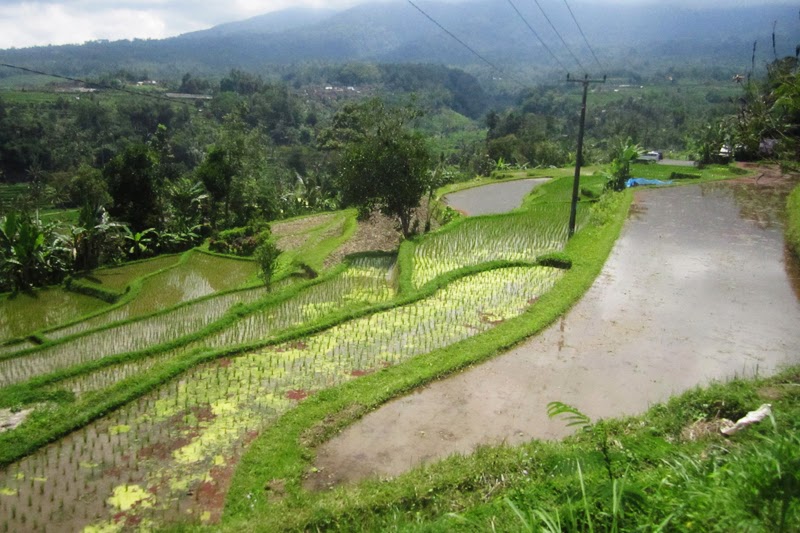
Northern Rice Fields:


Pura Luhur Uluwatu:


Bukit Lawang (Sumatra):


Lake Toba (Sumatra):


tiistai 5. marraskuuta 2013

The Island of Many Holidays

Today is Tuesday which means that normally students would have been sitting in the class rooms of Udayana University and studying Indonesian language and history. But once again this is no normal Tuesday - instead today is one of the numerous holidays of Bali. This thime there's the national holiday of Islamic New Year although that doesn't seem to affect too much the life in Bali. That's easy to explain by the fact that only 5 per cent of the population in Bali are Islamic and over 90 per cent believe in Hinduism.

As I've already mentioned Bali is the only place in Indonesia where Hinduism is the majority religion. Overall in Indonesia over 80 per cent of the population are Islamic and that's why Bali also respects all the national holidays of Indonesia. During last few weeks there has been so many different holidays and ceremonies that I decided to write a blog post about all of the holidays that are part of the Balinese calendar. That includes all Indonesian national holidays (mostly Islamic mut also some Christian and even Buddhist holidays) and also some special Balinese hinduism holidays. That's why Bali is called the island of many holidays.


National holidays:

- New Year's Day: I'm pretty sure that almos the whole world acknowledges the change of the year in the western calendar even though the country (or the area) would have its own calendar as Bali and Islamic world do. So yeah, New Year's Day is a puclic holiday also in Bali and Indonesia.

- Maulid Nabi Muhammad:This day is the celebration of the birth of Prophet Muhammad so it resembles the Christian Christmas. In Bali Maulid Nabi isn't that significant holiday (same way as all other Islamic holidays) because Islamic people are clearly in the minority in Bali. Overall in Indonesia Maulid Nabi is one ot the biggest holidays. 

- Chinese New Year: Also in Indonesia and in Bali the Chinese New Year is an official holiday because there's significant Chinese minority living in Indonesia. Chinese New Year is a great and gorgeous celebration but unfortunately it isn't celebrated that widely in Bali because there's very few Chinese people living permanently in the paradise island. Still, in some of the temples there may be some happenings.

- Nyepi: Nyepi is one of the biggest holidays in Bali and because of that it's also part of the official national holidays respected in the whole country of Indonesia. Still the influence of Nyemi is clearly the most visible in Bali amongst the Balinese Hindu people. Nyepi is the 'Day of Silence' when everyone in Bali stay home silently and meditating. During Nyepi all stores, public places and even the airport are closed down. From 6 AM until 6 AM next morning no one (execpt the official traditional security man) is allowed to leave their home and walk around the streets. This tradidion is followed by also the tourists and the visitors. In your home you aren't allowed to light any lights, have loud noices or have any kind of celebration. After Nyepi comes the new year in Balinese calendar that is celebrated widely. In 2014 Nyepi will take place in 31st March.

- Good Friday and Ascension Day of Jesus Christ: Although over 80 percent of Indonesian people are Islamic, even over 10 per cent of the population are Christian. That's why all the main Christian holidays are also part of the official holidays in Indonesia and even in Bali although only 1 per cent of Balinese are Christians. So yeah, Bali truly is the island of many holidays.

- Waisak: As I already mentioned above, Islamic, Christian and Balinese Hindu holidays aren't even enough because there's also one Buddhist holiday in the Indonesian calendar. It's true that only 1 per cent of the Indonesian population believe in Buddhism but that 1 per cent means more than 2 million people. So yeah, it's easy to understand why the Waisak, celebration day of birth, enlightment and death of Gautama Buddha (all in same time) is also an official holiday in Indonesia. In Bali it's pretty unnoticeable but in other parts of Indonesia there's huge groups of monks celebrating the Waisak.

- Ascension Day of Prophet Muhammad: As the name already propbably tells you, the main reason for this holiday is pretty much the same as the one for Jesus Christ in Christian calendar. And as I've already told you, the Islamic holidays aren't that significant in Bali although in other parts of Indonesia they are.

- Ramadan and Idul Fitri: Indonesia makes no exeption for celebrating Ramadan. The ninth month of Islamic calendar is Ramadan, Muslims worldwide observe this as a month of fasting. Of course the whole month of Ramadan isn't an official holiday but Idul Fitri (the end of Ramadan) is.

- Indepence Day: Indonesia got its independence from the Netherlands in 1949 and that great thing is celebrated every year in 17th August. This is of course really big holiday all over Indonesia.

- Idul Adha: I think I already mentioned Idul Adha in this blog as it was celebrated in Indonesia approximately one month ago. As most of the Indonesian holidays it is connected to Islamic religion: it is celebrated because the Prophet Ibrahim was ready to sacrifice his own son. I can tell by my own experience that Idul Adha is quite unvisible holiday in Bali.

- Islamic New Year: This is celebrated today and I can't say that it would've affected my everyday life here in Bali any way. Still, it's part of the official holiday calendar here and in other parts of Indonesia it is of course really important moment.

- Christmas Day: Same way as Eastern of course the biggest moment of the Christian year, the Christmas is also part of Indonesian holidays. I think it will be interesting to see how much the Christimas is really promoted in Bali because only 1 per cent of Balinese people are Christian but on the other hand Christmas is nowadays very global phenomenom. At least until now I haven't seen any Christmas buzz in Bali which is (in my opinion) a great thing. Let's see.

 photo galungan2_zps21ce0782.jpg

Balinese holidays:

- Saraswati: Saraswati is the Balinese Hindy holiday to celebrate the day when knowledge is given by gods. The day is celebrated by traditional Hindu rituals, which include traditional dancing and singing holy songs. The day is named after the beautiful goddess Saraswati. I can't say anything concrete about celebrating Saraswati in Bali because I haven't had chance to see that in person.

- Pagarwesi: Pagarwesi is one of the main holidays amongst the Balinese Hindu people. Balinese people believe that giving really special gifts to god can save them from evil and unluckiness.

- Tawur Agung Kesanga: The day before Nyepi (look above). The big ceremonies are held, people wear traditional costumes, everyone's playing music and so on. This is the 'The Day of Great Sacrifices'.

- Ngembak Geni: The day after Nyepi. After the period of 24 hours of silence has ended, familys and friend reunite and spend the day together.

- Galungan and Kuningan: Galungan and Kuningan are clearly one of the biggest holidays in Bali. There are big ceremonies and huge decorations (look the picture above) can be found everywhere. Galungan and Kuningan are one of those few times during the year when it's much more difficult to find an open store or restaurant (even though it's not impossible at all). Balinese people believe that Galungan is the day when the spirits of deceased people return to their homes. 10 days later comes Kuningan when the spirits return to the heaven.

perjantai 1. marraskuuta 2013

The End of Mid Term Tests


Yeah, that picture pretty much sums up the agenda of this week. It's a picture of my Indonesian test that I took basically just to check if I have learned anything about Indonesian during last two months. As I've already mentioned many times, I don't study in Udayana University (I'm just hanging there to observe the everyday student life and of course try to help the students) so it's no use for me to do the actual test because I'm not going to get any credits from the courses.

The situation is of course completely different for our exchange students who had in overell six exams during Monday, Tuesday and Wednesday. They really had to try their best during the exams because the results of mid term tests are a big part of the grade that they're getting from their courses. Of course the other big part are the final tests that take place in the end of the semester in December. So yeah, studying in Bali isn't just partying and surfing: students have to show that they've also learned something. There were two exams in Indonesian language and one in other courses (literature, tourism, Indonesian history, business law and economy). I heard that especially business law and economy were quite though but many students seemed to be quite satisfied with their answers.

Anyway, there were a lot of happy faces around campus area on Wednesday afternoon when the mid term test week was over - especially because there was no excursion or workshop on Thursday so the students had an exceptionally long weekend ahead :) On top of that there was also some pretty nice Halloween pool parties on Thursday (even though Balinese people dont celebrate Halloween, the culture has arrived here because of the Western tourists). There's even more pool parties coming up during the weekend so yeah, I have to say: studying in Bali can be pretty fun even though sometimes you have to put some effort on your studies.